Jastej Matharu

Jastej Matharu

I am an Indian Army veteran with specialization in military vehicle technology. I founded MRO Channel Forum to provide a platform to MRO professionals.

From Maintenance to Meaning: Four Years of MRO Channel Forum

After retiring from the Indian Army in 2017, I found myself asking a simple but persistent question: what happens to knowledge when experienced people leave service? Having spent decades in maintenance, repair, and overhaul (MRO), I realized that the practical wisdom sustaining military readiness was rarely documented or shared widely. With help from my son and support from colleagues and senior veterans, I began building digital platforms that grew into the MRO Channel Forum. Through articles, webinars, discussions, and YouTube interviews, we created a space where professionals could exchange ideas on defense technology, logistics, and strategy. What began as a retirement experiment became a living repository of knowledge, lifelong learning, and intergenerational collaboration.

AI, Vibe Coding, and the Changing Role of Software Engineers

Artificial intelligence is transforming software development by enabling even non-programmers to create applications through “vibe coding.” AI can automate coding, testing, and business workflows, making software creation faster and more accessible. However, when software is built for clients, reliability, security, maintenance, and accountability become critical. In such cases, software engineers remain essential for understanding systems, validating AI-generated code, fixing issues, and ensuring long-term stability. AI also introduces economic and technical challenges, including token costs, infrastructure expenses, messy code, and AI hallucinations. Rather than replacing software engineers, AI is reshaping their role into one focused on supervision, integration, judgment, and system management.

The Changing Nature of Military Power: From Superpowers to Distributed Strength

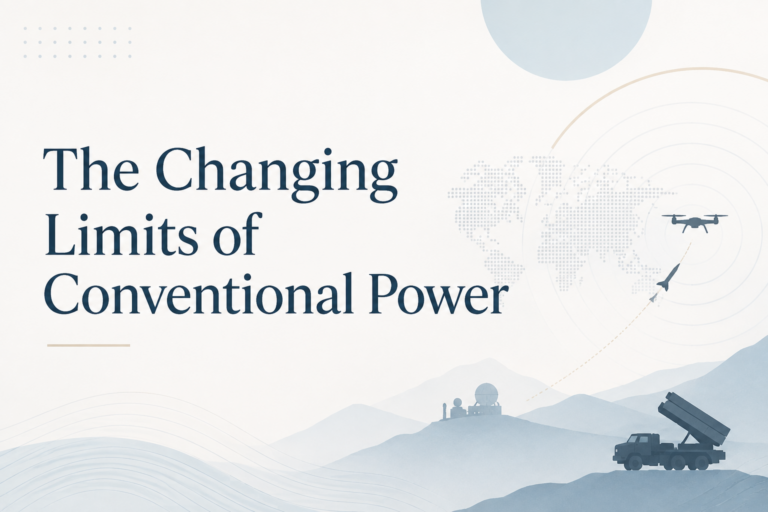
Recent conflicts show that smaller nations can now challenge traditional superpowers, reflecting a major shift in military power. After World War II, industrial capacity became central to warfare, evolving into advanced military-industrial ecosystems during the Cold War. Since the 1990s, warfare has transitioned from mass production to precision and technology-driven systems. With the spread of digital tools, drones, and missile technologies, military capabilities are no longer limited to a few dominant nations. Power is now more distributed and fluid, requiring adaptability and innovation. As a result, global dominance is less certain, and the balance of power is increasingly shaped by technological integration and strategic flexibility.

Artificial Intelligence in Warfare

Artificial Intelligence is transforming military operations by enhancing data processing, decision-making, and logistics efficiency, especially at command and control levels. However, its effectiveness is constrained in contested battlefield environments where communication is limited or disrupted. Over-reliance on AI risks eroding human expertise, making dual capability essential. Like in MRO systems, strong fundamentals, resilience, and human skills remain critical. AI must be integrated thoughtfully, with focus on indigenous development, edge computing, and lifecycle support. Ultimately, warfare remains adaptive and uncertain, and AI is a tool—not a substitute—for trained personnel and robust operational systems.

The Rise of Asymmetric Technology: A New Phase in the Evolution of the Military Industrial Base

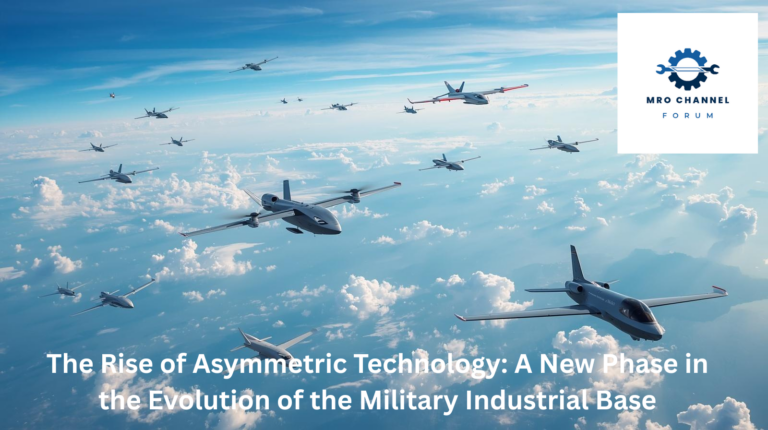
Recent conflicts in Europe and the Middle East highlight the growing impact of asymmetric technologies such as drones and low-cost precision systems that can challenge expensive traditional military platforms. This shift suggests that technological advantage is no longer determined solely by the size of a nation’s military industrial base. Smaller or mid-level defence ecosystems can now develop niche capabilities that produce disproportionate battlefield effects. For countries like India, this creates an opportunity to strengthen innovation through startups, MSMEs, and digital technologies. While traditional defence manufacturing remains essential, the future battlefield will increasingly favor agile innovation ecosystems capable of rapidly developing disruptive and cost-effective military technologies.

Two Signals from Indian Industry: The Rise of Indigenous Aero-Propulsion and Precision Aerospace Manufacturing

India’s aerospace ecosystem is showing encouraging momentum through both innovation and manufacturing expansion. Green Aero Propulsion has successfully fired an indigenous sub-kilonewton jet engine, demonstrating progress in small turbojet propulsion for drones and unmanned systems. At the same time, Belrise Industries is expanding into global aerospace precision engineering, leveraging its strong automotive manufacturing base. Together, these developments signal the emergence of a broader industrial opportunity: building domestic capabilities in propulsion technologies, advanced materials, additive manufacturing, and aerospace components. If supported by collaboration between startups, MSMEs and large manufacturers, India could strengthen its position in global aerospace and defence supply chains.

Is Talent the New Gold?

Talent is the new gold, driving technology and innovation worldwide. India, with an expected 18 million STEM graduates annually by 2027, is a major source of global talent. Yet, large numbers still go abroad—8.95 lakh in 2023—though visa restrictions and lifestyle improvements at home are shifting trends. Multinationals are capitalizing by setting up Global Capability Centers in India, now 1,700 strong, employing 1.9 million. To maximize this potential, India must improve STEM education quality, strengthen IP retention, and create world-class career opportunities. Success could transform India into a global innovation hub, retaining talent and fostering unicorns at home.

Reflections on the NDTV Defence Summit

The NDTV Defence Summit highlighted key themes shaping India’s defence preparedness. The focus must remain on products over processes, ensuring timely delivery of effective systems like the Akash missile. While checks and balances are vital, they should not delay outcomes. Agentic AI can streamline procurement, reducing timelines drastically. Supporting innovation and MSMEs through financing, grants, and possibly an Atmanirbhar Bharat Bank is crucial. Indigenous systems, though not perfect initially, provide resilience, supply chain assurance, and long-term sustainability, especially in conflict. The seminar reinforced that defence effectiveness rests on innovation, indigenous capability, and a balance between accountability and delivery.

MRO Channel Forum Turns Three: Highlights

The MRO Channel Forum, now three years old, is a collaborative platform advancing India’s defense, aerospace, and sustainment sectors through expert-led articles and videos. It highlights the role of MRO in military readiness, explores cutting-edge technologies like AI and EVs, and promotes indigenization, MSME integration, and veteran knowledge-sharing. Covering topics from tank design to predictive maintenance and digital innovation, the Forum serves as a strategic resource for policymakers, engineers, and entrepreneurs. Its mission is to foster self-reliance and informed decision-making, empowering stakeholders to build a mission-ready, technologically advanced, and sustainable defense ecosystem.

India’s MRO and Aerospace Sectors Take Off Amid Strategic Collaborations and Growing Demand

India's MRO and aerospace sectors are witnessing rapid growth, with the MRO industry projected to exceed ₹4,500 crore by FY26, driven by a 20–25% fleet expansion. Key developments include Safran-HAL's partnership for LEAP engine parts and Bharat Forge's collaboration with Liebherr-Aerospace to set up a precision manufacturing plant in Pune. These global tie-ups bring advanced technologies, while policy support like GST reduction boosts competitiveness. The result is stronger profitability, expanded infrastructure, and increased self-reliance. Together, these factors position India as a rising global hub for both civil and defence aviation maintenance, manufacturing, and skilled job creation.