Category Articles

The Changing Limits of Conventional Power

For much of the history of conventional warfare, military operations were shaped by a relatively understandable relationship between the range of weapons and the location of logistics. Artillery could deliver large quantities of ammunition against an adversary, but only within…

The Future Battlefield: Autonomous Weapons, Civilian Protection and Strategic Challenges

The article examines how artificial intelligence and autonomous weapons are reshaping modern warfare while highlighting the challenges of protecting civilians and upholding international humanitarian law. AI-enabled systems can improve intelligence gathering, surveillance, target tracking, precision strikes, and operational decision-making, reducing reliance on indiscriminate attacks. However, they remain vulnerable to technical failures, cyber threats, and contextual misjudgments, making meaningful human oversight essential. The paper argues that autonomous systems should support, not replace, human commanders in decisions involving lethal force. It concludes that future military success will depend not only on technological superiority but also on ethical leadership, legal accountability, and responsible use of autonomous capabilities.

From Maintenance to Meaning: Four Years of MRO Channel Forum

After retiring from the Indian Army in 2017, I found myself asking a simple but persistent question: what happens to knowledge when experienced people leave service? Having spent decades in maintenance, repair, and overhaul (MRO), I realized that the practical wisdom sustaining military readiness was rarely documented or shared widely. With help from my son and support from colleagues and senior veterans, I began building digital platforms that grew into the MRO Channel Forum. Through articles, webinars, discussions, and YouTube interviews, we created a space where professionals could exchange ideas on defense technology, logistics, and strategy. What began as a retirement experiment became a living repository of knowledge, lifelong learning, and intergenerational collaboration.

AI, Vibe Coding, and the Changing Role of Software Engineers

Artificial intelligence is transforming software development by enabling even non-programmers to create applications through “vibe coding.” AI can automate coding, testing, and business workflows, making software creation faster and more accessible. However, when software is built for clients, reliability, security, maintenance, and accountability become critical. In such cases, software engineers remain essential for understanding systems, validating AI-generated code, fixing issues, and ensuring long-term stability. AI also introduces economic and technical challenges, including token costs, infrastructure expenses, messy code, and AI hallucinations. Rather than replacing software engineers, AI is reshaping their role into one focused on supervision, integration, judgment, and system management.

The Changing Nature of Military Power: From Superpowers to Distributed Strength

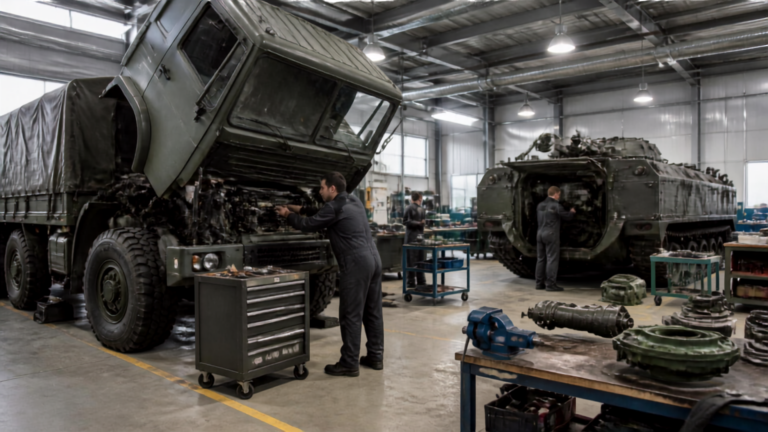
Recent conflicts show that smaller nations can now challenge traditional superpowers, reflecting a major shift in military power. After World War II, industrial capacity became central to warfare, evolving into advanced military-industrial ecosystems during the Cold War. Since the 1990s, warfare has transitioned from mass production to precision and technology-driven systems. With the spread of digital tools, drones, and missile technologies, military capabilities are no longer limited to a few dominant nations. Power is now more distributed and fluid, requiring adaptability and innovation. As a result, global dominance is less certain, and the balance of power is increasingly shaped by technological integration and strategic flexibility.

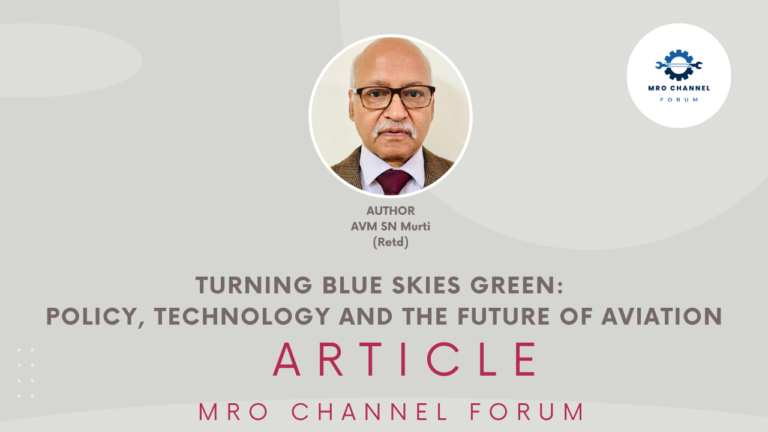
TURNING BLUE SKIES GREEN: POLICY, TECHNOLOGY AND THE FUTURE OF AVIATION

Aviation’s environmental impact extends beyond flight operations, with Maintenance, Repair, and Overhaul (MRO) playing a critical role in emissions across the aircraft lifecycle. Engine degradation, aerodynamic inefficiencies, and excess weight increase fuel burn, while predictive and condition-based maintenance restore efficiency and reduce emissions. Digital MRO, sustainable materials, and green infrastructure further support decarbonization. Lifecycle decisions—whether to extend aircraft life or replace with newer models—must balance operational efficiency against embedded carbon. Regulators increasingly integrate environmental standards into maintenance practices. Overall, a data-driven, sustainability-focused MRO approach is essential to achieving meaningful, long-term reductions in aviation’s environmental footprint.

Artificial Intelligence in Warfare

Artificial Intelligence is transforming military operations by enhancing data processing, decision-making, and logistics efficiency, especially at command and control levels. However, its effectiveness is constrained in contested battlefield environments where communication is limited or disrupted. Over-reliance on AI risks eroding human expertise, making dual capability essential. Like in MRO systems, strong fundamentals, resilience, and human skills remain critical. AI must be integrated thoughtfully, with focus on indigenous development, edge computing, and lifecycle support. Ultimately, warfare remains adaptive and uncertain, and AI is a tool—not a substitute—for trained personnel and robust operational systems.