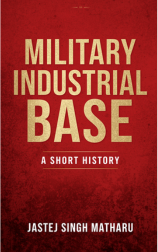


Recent conflicts in Europe and West Asia have highlighted an important shift in global power dynamics: even relatively smaller nations are now capable of challenging traditional superpowers. To understand how this change has come about, it helps to take a step back and look at the evolution of military power through a historical lens.
In the aftermath of the Second World War, a crucial transformation took place. The military-industrial base—once seen mainly as a supporting structure—emerged as a central pillar of national power. The war had clearly demonstrated that victory depended not only on battlefield strategy and operations, but also on a nation’s ability to produce, innovate, and sustain complex military systems.
By the end of the 1950s, this military-industrial base had evolved into a highly sophisticated and decisive instrument. It was no longer limited to manufacturing weapons; it had become a powerful engine for technological progress. During this period, the United States and the Soviet Union built exceptionally strong military-industrial ecosystems. As a result, the world entered a bipolar phase, dominated by these two superpowers, a structure that remained largely intact until 1991.
However, even before the end of the Cold War, signs of transition had begun to appear. The global military-industrial landscape started shifting away from rigid bipolarity toward a more complex and nuanced system. The decade from 1990 to 2000 marked a significant turning point. This was a period of transition from mass-based industrial power to precision-driven, information-centric warfare. Digital technologies began to play a key role, and new industrial players started to emerge.
During this time, the United States continued to rely on its highly innovative private sector, supported by government funding and a strong research ecosystem. At the same time, countries like Russia and China strengthened their capabilities through more state-driven approaches. Gradually, other nations also began investing in and developing their own military-industrial bases.
Today, we are witnessing a phase that may well be remembered as a defining moment in modern military history. Military power is now more widely distributed than ever before. Nations that once had relatively limited capabilities are increasingly able to bridge the gap with traditional superpowers. The widespread availability and proliferation of technology have played a key role in this transformation, enabling smaller or less industrially advanced countries to strengthen their defense capabilities.
This shift has also changed the nature of warfare itself. In the past, dominance in the sea and air domains was considered decisive. Now, land-based systems with extended reach—supported by technologies such as drones, cruise missiles, and ballistic missiles—are capable of projecting power far beyond national borders. Importantly, these technologies are no longer exclusive to the most advanced military-industrial powers; they are increasingly accessible to nations with more modest capabilities.
As a result, the earlier clear-cut structure of global power—defined by a few dominant superpowers—has given way to a more fluid and distributed order. Defense strategies must now account for a wider range of actors and capabilities. The balance between quality and quantity, as well as between centralized and distributed systems, will shape the next phase of military evolution.
In this emerging order, no single nation can assume uncontested dominance. Instead, adaptability, innovation, and the ability to effectively integrate new technologies will determine how nations position themselves. The changing nature of military-industrial power is not just reshaping defense strategies—it is redefining the global balance of power itself.