Jastej Matharu

Jastej Matharu

I am an Indian Army veteran with specialization in military vehicle technology. I founded MRO Channel Forum to provide a platform to MRO professionals.

Reflections on the NDTV Defence Summit
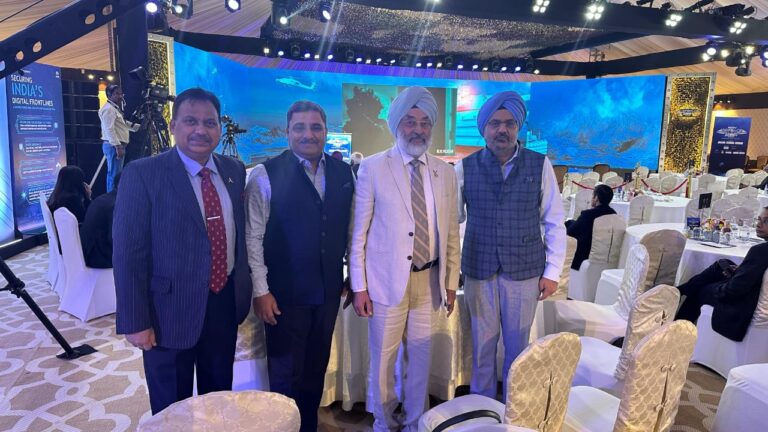
The NDTV Defence Summit highlighted key themes shaping India’s defence preparedness. The focus must remain on products over processes, ensuring timely delivery of effective systems like the Akash missile. While checks and balances are vital, they should not delay outcomes. Agentic AI can streamline procurement, reducing timelines drastically. Supporting innovation and MSMEs through financing, grants, and possibly an Atmanirbhar Bharat Bank is crucial. Indigenous systems, though not perfect initially, provide resilience, supply chain assurance, and long-term sustainability, especially in conflict. The seminar reinforced that defence effectiveness rests on innovation, indigenous capability, and a balance between accountability and delivery.


MRO Channel Forum Turns Three: Highlights

The MRO Channel Forum, now three years old, is a collaborative platform advancing India’s defense, aerospace, and sustainment sectors through expert-led articles and videos. It highlights the role of MRO in military readiness, explores cutting-edge technologies like AI and EVs, and promotes indigenization, MSME integration, and veteran knowledge-sharing. Covering topics from tank design to predictive maintenance and digital innovation, the Forum serves as a strategic resource for policymakers, engineers, and entrepreneurs. Its mission is to foster self-reliance and informed decision-making, empowering stakeholders to build a mission-ready, technologically advanced, and sustainable defense ecosystem.

India’s MRO and Aerospace Sectors Take Off Amid Strategic Collaborations and Growing Demand

India's MRO and aerospace sectors are witnessing rapid growth, with the MRO industry projected to exceed ₹4,500 crore by FY26, driven by a 20–25% fleet expansion. Key developments include Safran-HAL's partnership for LEAP engine parts and Bharat Forge's collaboration with Liebherr-Aerospace to set up a precision manufacturing plant in Pune. These global tie-ups bring advanced technologies, while policy support like GST reduction boosts competitiveness. The result is stronger profitability, expanded infrastructure, and increased self-reliance. Together, these factors position India as a rising global hub for both civil and defence aviation maintenance, manufacturing, and skilled job creation.

The Power of Maintenance: Reducing Downtime, Costs, and Risks

Maintenance is not just an expense—it’s an investment that prevents financial losses, enhances safety, and extends asset lifespan. The Qantas A380 crisis highlighted how poor inspections led to a $100 million loss. Toyota’s predictive maintenance cut downtime by 30% and repair costs by 40%. London Underground’s proactive approach extended asset life and saved millions. Shell & BP’s corrosion monitoring prevented disasters and ensured compliance. Across industries, predictive and preventive maintenance reduces downtime, lowers costs, extends asset life, and enhances safety, proving that maintenance is essential for long-term success and efficiency.

India’s Need for an Indigenous Tank Engine: A Path to Self-Reliance

South Korea’s development of a 1,000-horsepower tank engine marks a significant achievement, highlighting the strategic importance of indigenous engine manufacturing. Countries like Germany, the U.S., Russia, and China dominate this sector, but India has the potential to develop its own. With strong capabilities in automotive engine manufacturing from companies like Tata Motors, Mahindra, and Ashok Leyland, India can scale up to produce a tank engine. To achieve this, the government must incentivize private sector participation through assured procurement, financial support, and collaboration with defense organizations. Indigenous engine development will enhance self-reliance, cost efficiency, and defense readiness for India.

DeepSeek R1: The AI Disruptor Reshaping Global Tech and Market Dynamics

The launch of DeepSeek's AI model, R1, on January 20, 2025, has disrupted the U.S. tech industry due to its high performance and low production costs. Developed in China using open-source models and cost-efficient hardware, R1 was trained for just $5.6 million, far less than U.S. counterparts. Its impact caused major market losses, including a $600 billion drop in Nvidia’s valuation. This shift is compared to the 2000 dot-com bubble, highlighting AI’s rapid evolution. As competition intensifies, nations must streamline innovation to stay ahead, emphasizing efficiency, agility, and technological leadership in the evolving AI landscape.

Building a Dynamic Defense Innovation Ecosystem: A Strategic Imperative for National Security

In today's rapidly changing global landscape, nations must establish agile, effective defense innovation ecosystems. Failing to keep pace with defense technology innovation can leave countries vulnerable to security threats from more advanced adversaries. Below, we explore the essential components that define a successful defense innovation ecosystem, one that can foster new solutions, drive collaboration, and remain adaptable in the face of evolving challenges.

Defense Equipment Maintenance: A Service-Specific Approach

Defense maintenance is vital for operational readiness, tailored by each branch—the Army, Navy, and Air Force—to suit their unique operational environments. Core strategies include preventive, predictive, and corrective maintenance, supported by reliability-centered methods and computerized systems. The Army prioritizes mobility with field-ready repairs; the Navy focuses on corrosion control for extended sea deployments; and the Air Force emphasizes precision for safety-critical aviation. Challenges like corrosion, cybersecurity, and incomplete documentation are common, requiring skilled personnel and ongoing training. By addressing these needs, military maintenance maximizes equipment reliability and mission effectiveness across diverse conditions.