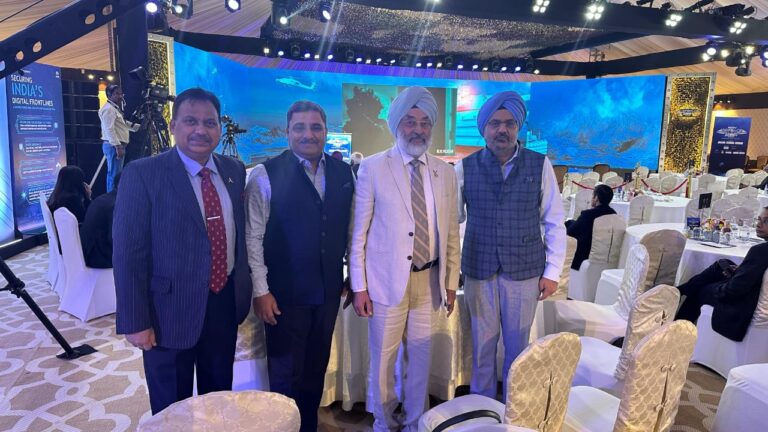
Reflections on the NDTV Defence Summit

The NDTV Defence Summit highlighted key themes shaping India’s defence preparedness. The focus must remain on products over processes, ensuring timely delivery of effective systems like the Akash missile. While checks and balances are vital, they should not delay outcomes. Agentic AI can streamline procurement, reducing timelines drastically. Supporting innovation and MSMEs through financing, grants, and possibly an Atmanirbhar Bharat Bank is crucial. Indigenous systems, though not perfect initially, provide resilience, supply chain assurance, and long-term sustainability, especially in conflict. The seminar reinforced that defence effectiveness rests on innovation, indigenous capability, and a balance between accountability and delivery.

AIRCRAFT MAINTENANCE 2.0: ADVANTAGE AI AND ADVANCED TECHNOLOGIES

Aircraft maintenance is transitioning from traditional, preventive methods to smarter, AI-driven predictive strategies. While age-based maintenance applies to only 18% of systems, 82% benefit from condition-based approaches, reducing downtime and human error. AI, IoT, data analytics, and drone inspections enable real-time monitoring, improving safety and cost efficiency. New strategies like Progressive Maintenance and IRAN emphasize flexibility and accuracy. Legacy and modern aircraft both gain from predictive maintenance. Emerging technologies like AR/VR, robotics, and digital twinning are shaping the industry's future. For Indian MROs to stay relevant, adapting to these advanced technologies and upskilling the workforce is essential.

US PLANS “GOLDEN DOME” SHIELD

The Golden Dome is a proposed \$175 billion U.S. space-based missile defense system announced in 2025 by President Trump. Inspired by Israel’s Iron Dome, it aims to deploy hundreds of satellites with sensors and interceptors to defend against ballistic, hypersonic, and cruise missiles. Unlike existing systems, Golden Dome includes offensive and preemptive capabilities. Critics warn it could cost trillions, trigger a global arms race, and violate space treaties. While ambitious, the plan faces technological, financial, and geopolitical challenges. It marks a major shift in missile defense strategy, reviving elements of Reagan’s abandoned "Star Wars" program from the 1980s.

MRO Channel Forum Turns Three: Highlights

The MRO Channel Forum, now three years old, is a collaborative platform advancing India’s defense, aerospace, and sustainment sectors through expert-led articles and videos. It highlights the role of MRO in military readiness, explores cutting-edge technologies like AI and EVs, and promotes indigenization, MSME integration, and veteran knowledge-sharing. Covering topics from tank design to predictive maintenance and digital innovation, the Forum serves as a strategic resource for policymakers, engineers, and entrepreneurs. Its mission is to foster self-reliance and informed decision-making, empowering stakeholders to build a mission-ready, technologically advanced, and sustainable defense ecosystem.

STRATEGIC IMPERATIVE: LEVERAGING FREE TRADE AGREEMENTS FOR INDIA’S DEFENCE AND SECURITY ADVANCEMENT

India is leveraging Free Trade Agreements (FTAs) as strategic tools to boost its defence, technology, and economic sectors amid global trade uncertainties. Moving from a cautious to a calculated engagement approach, India aims to secure dual-use technologies, access critical minerals, and enhance defence exports while protecting MSMEs and strategic autonomy. FTAs with partners like the US, EU, UK, and UAE serve as platforms to promote co-development, technology transfer, and supply chain resilience. India must balance growth with safeguards in public procurement, IPR, and cybersecurity, ensuring FTAs align with its broader security and strategic objectives.

THE TRIUMPH OF INDIGENOUS DEFENSE: OPERATION SINDOOR

Operation Sindoor showcased India’s growing defense self-reliance and technological prowess through the successful deployment of indigenous systems like the Nagastra-1, SkyStriker drones, Akash air defense, and BrahMos missiles. It highlighted seamless integration of legacy and modern systems, supported by indigenous electronic warfare, communication, and radar networks. The operation exposed weaknesses in Pakistan’s Chinese-made defenses and enhanced India's global defense credibility. This triumph emphasized India's capability to deliver high-impact results with cost-effective systems, boosting export potential and inviting international collaboration. Operation Sindoor marks a transformative milestone in India’s journey toward becoming a global leader in defense innovation and manufacturing.

TARIFF WARS: A THREAT TO GLOBAL DEFENSE INDUSTRY STABILITY

The 2025 tariff wars have destabilized the global defense industry by disrupting intricate supply chains, raising costs, and straining geopolitical alliances. Defense production, heavily reliant on rare earth elements and semiconductors, faces delays and cost inflation due to tariffs and export bans. Major arms producers like the U.S., EU, China, and emerging exporters like India are significantly impacted. India, facing U.S. tariffs and supply disruptions, must diversify suppliers, invest in domestic capabilities, and forge new alliances to mitigate risks. Strategic partnerships, R&D investments, and defense trade agreements are essential to sustaining India's defense industry amid global instability.

India’s MRO and Aerospace Sectors Take Off Amid Strategic Collaborations and Growing Demand

India's MRO and aerospace sectors are witnessing rapid growth, with the MRO industry projected to exceed ₹4,500 crore by FY26, driven by a 20–25% fleet expansion. Key developments include Safran-HAL's partnership for LEAP engine parts and Bharat Forge's collaboration with Liebherr-Aerospace to set up a precision manufacturing plant in Pune. These global tie-ups bring advanced technologies, while policy support like GST reduction boosts competitiveness. The result is stronger profitability, expanded infrastructure, and increased self-reliance. Together, these factors position India as a rising global hub for both civil and defence aviation maintenance, manufacturing, and skilled job creation.

DEVELOPING DEFENCE INDUSTRIAL CAPABILITY – LESSONS FROM HISTORY

India’s quest for self-reliance in military hardware has been underway for more than three decades now. While numerous committees have been formed over the years to examine the issue and recommend the way forward and incremental measures have been introduced from time to time, it is only recently that the MOD is in mission mode to achieve a transformation in the Indian military Industrial complex. The adverse effects of the Russia - Ukraine war on the delivery of equipment and spares from Russia as well on global supply chains, has highlighted the urgency of this transformation, especially in light of the tensions on our northern borders. Towards this end various measures have been implemented, primarily by way of procurement policies focused on indigenous products, discouragement of imports, rationalization of tax structures to provide a level playing field to all players private or public, encouragement of exports, incentives for SMEs/MSMEs, funding for defence innovations, streamlining of acquisition procedures including defence offsets, to name a few. The key agent for these changes has been the Defence Acquisition Procedure 2020 (DAP 2020). It is however appropriate at this stage to assess the adequacy of these measures and identify what more can be done.