

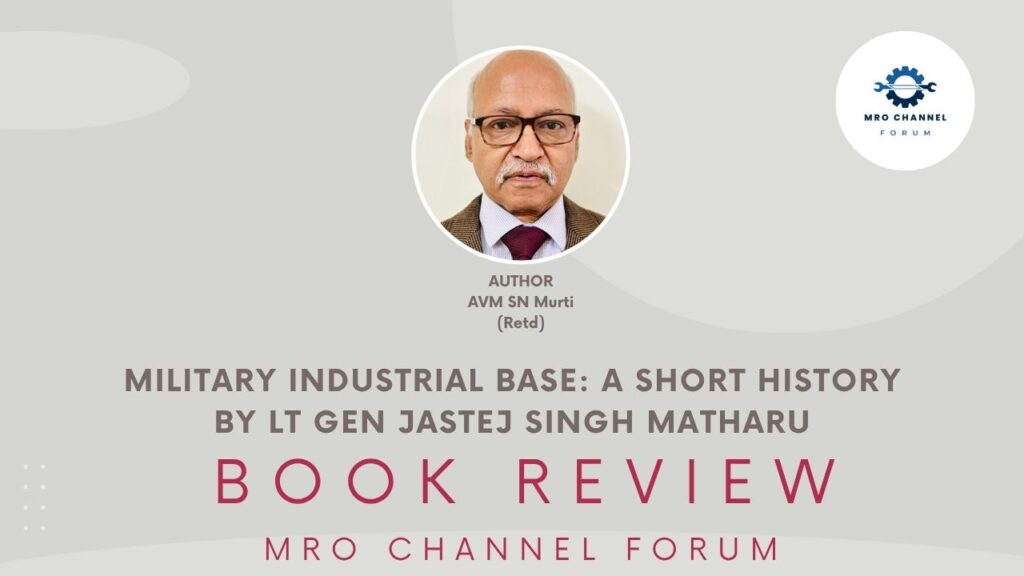
Military Industrial Base: A Short History offers a concise and insightful account of how Military Industrial Systems have evolved in response to war, technology, geopolitics, and statecraft. The author effectively presents military industrial bases not merely as production systems but as instruments of national power shaped by crises and strategic competition. Tracing developments from the Second World War to the present, the book explains how major powers adapted their industrial capacities to changing geopolitical realities. The discussion on the integration of state policy, scientific research, industry, and logistics during the Second World War provides a strong foundation for understanding modern military industrial ecosystems. Equally compelling is the analysis of the Cold War’s role in accelerating advances in aerospace, nuclear, electronics, and missile technologies.
The treatment of post war reconstruction and technological adaptation is particularly insightful. Japan’s industrial resurgence and Europe’s security dependence on the United States are examined logically, while the link between military investment and civilian technological innovation is effectively highlighted. The chapters on the late Cold War and post-Cold War eras are especially relevant. The author captures the transition from industrial age warfare to information-centric, precision-guided operations, highlighting the impact of digitization, surveillance technologies, and network-centric warfare. His assessment of defence industrial restructuring following the collapse of the Soviet Union is thoughtful and balanced. A notable contribution of the book is its warning that nations unable to adapt their military industrial structures risk strategic decline. The vulnerabilities arising from excessive dependence on globalized supply chains, exposed by the COVID-19 pandemic, semiconductor shortages, and the Ukraine conflict are convincingly analysed. The discussion on China’s rise is equally significant, portraying its civil-military fusion model as a distinctive alternative to both Soviet and American approaches.
For Indian readers, the analysis is particularly relevant. The author’s observations on bureaucratic inertia, public sector dominance, technology denial regimes, and procurement delays are realistic. His argument that India must progress from licensed production to indigenous design and innovation aligns well with the broader objective of strategic autonomy. The book’s greatest strength lies in presenting military industrial evolution as a dynamic process driven by innovation, resilience, and technological sovereignty. Written in an accessible style, it succeeds in making a complex subject understandable to both professionals and informed general readers.
In conclusion, Military Industrial Base: A Short History is a valuable contribution to strategic studies literature, particularly in the Indian context. While some historical and economic aspects could have been explored in greater depth, the book successfully stimulates reflection on the enduring relationship between industrial capability and national power. It is recommended reading for military professionals, policymakers, scholars, and students of strategic affairs.
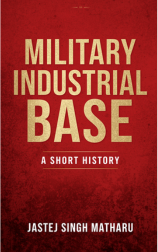
Very interesting subject. How does one procure the book?
The book may be downloaded in a Kindle app on your mobile phone. You will have to buy it on your Amazon account before though. There is no physical book, only an ebook. The link to the book is here: https://www.amazon.com/dp/B0GYVLG4NF